
Stop struggling with messy data in Datawrapper
The biggest bottleneck in any data analysis workflow is often the data cleaning step. You can have the most advanced visualization tool, but if your data is dirty, your dashboards will break and your insights will be misleading.
For users of Datawrapper, the struggle of data cleaning is all too real. Whether it's manual spreadsheet editing in the upload step or just the general headache of messy files, the key to unlocking the full potential of your visualizations is to clean your data before it hits Datawrapper.
The Most Common Data Headache: Date Columns
The Date column is the most common source of headaches for data analysts. You import your dataset into Datawrapper, and suddenly your time-series charts are broken because:
- Some dates are "DD/MM/YYYY" (European style).
- Others are "MM-DD-YYYY" (US style).
- Some are just text strings like "Jan 12, 2024".
Trying to fix this inside Datawrapper is a nightmare. You end up writing complex parsing functions, creating rigid formulas, or manually editing cells in Excel. It's error-prone and tedious.
Our Philosophy: "Accept Everything, Output One"
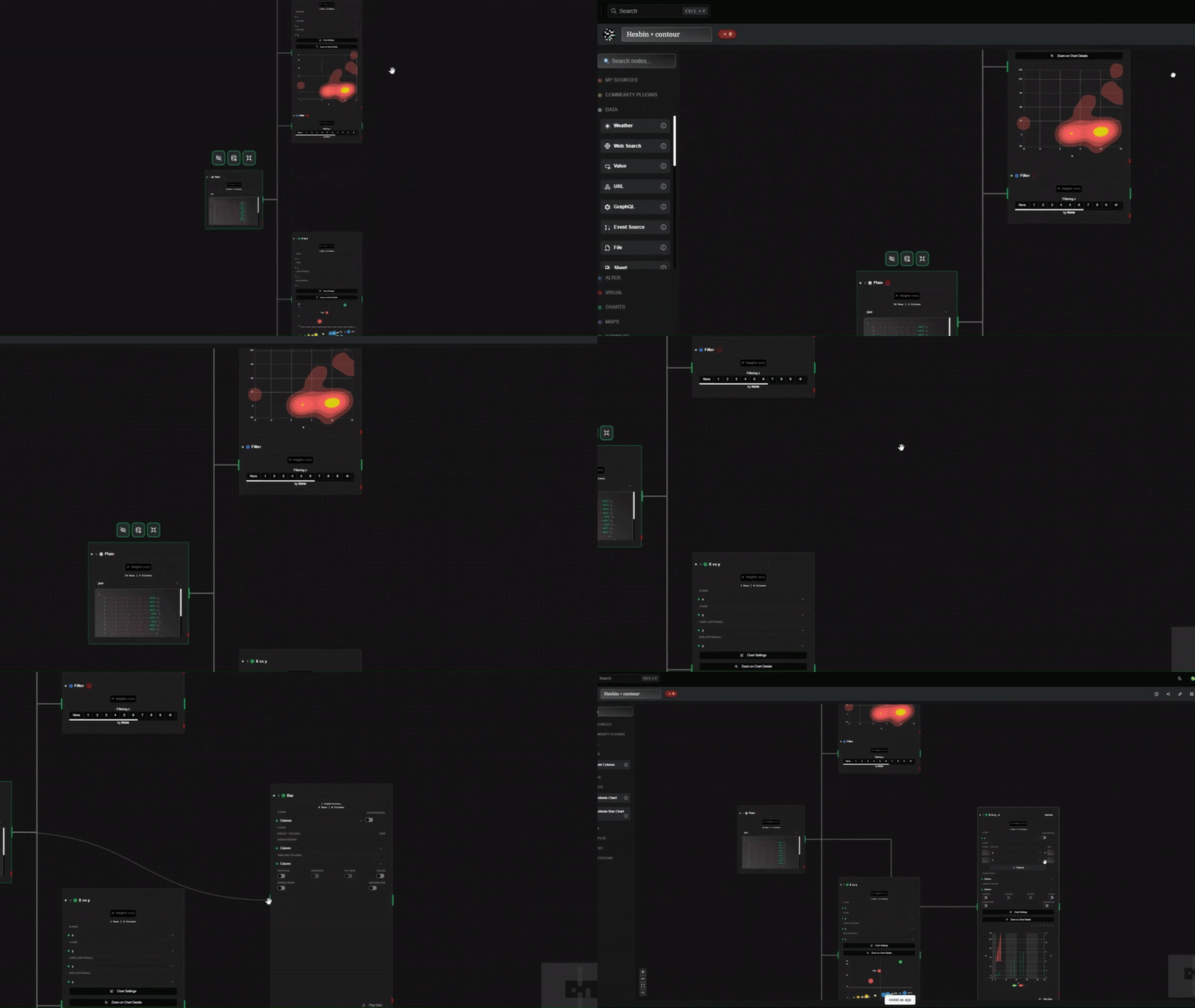
When it comes to data cleaning, especially for timestamps, Datastripes takes a radically different approach. We believe in "Accept Everything, Output One.", which means that instead of asking you to write code to define the date format, Datastripes uses a smart ingestion engine that accepts mixed formats automatically.
- First, you drop your raw CSV. Datastripes detects the Date column, even if it contains 5 different formats mixed together.
- Then, the system automatically converts everything into a single, universal standard (ISO 8601).
- Finally, you see a timeline distribution immediately. If there are outliers (e.g., a date in the year 2099), you spot them visually and filter them out with a click. You don't worry about how the date is written. You just know that what comes out is a clean, sortable timestamp.
Visual Data Cleaning Beyond Dates
The power of Datastripes goes beyond just cleaning dates. By using a visual node-flow before sending data to Datawrapper, you can:
- Filter outliers visually using histograms.
- Group categories (e.g., turning "USA", "U.S.", and "US" into "United States") via a simple interface.
- Deduplicate rows based on IDs without writing SQL.
Now it's your turn
Start cleaning your data visually in minutes, then export it ready for Datawrapper. Try Datastripes for free and see your data clearly for the first time.